
Any athlete with a serious eye on progress knows the importance of consistency when it comes to dialing in on their physical training, their dietary requirements and their strategies for competitions. Skipping your final deload and applying a competitive mindset to consuming junk food in the run-up to a competition is unlikely to get you the results that you want, right? However, whilst that combination of training, nutrition and tactics takes up 95% of your prep time, the actual competition day is more like a 90% mental battle. You’ve put in all that work for one day, and that can really get in your head.
Maybe it comes out as panicking before you hit the platform, pitch, green or oche. A wave of self-doubt that tells you that you haven’t prepared properly, or that you’re not at the level you want to be. It doesn’t have to be a voice screaming at you in your head, it might just be a quiet doubt that means your head isn’t really in the game when it needs to be. Perhaps it develops into something like the yips. Overthinking how and when to move, freezing up altogether in some cases. It could even be that, as so commonly happens, you pick up a nagging injury pushing yourself in the run-up to the big day. A tight shoulder, a tender knee, that pulling feeling that builds without warning. The result is hesitation or self-doubt that you’ll actually be able to perform. All that work to build your edge, only to lose it when your mental game doesn’t match your efforts when it really counts.
So , what can you do to gain and maintain that mental edge? Well, hypnotherapy can be a brilliant tool for addressing all of the issues mentioned above (it would be a weird blog if it didn’t, right?). There is a list of common misconceptions that I encounter all the time when it comes to hypnotherapy and hypnosis. I’ll sum them up here and you can play misconception bingo if you’d like. No, hypnosis isn’t a magic trick. No, it’s not mind control. No, you can’t be made to do anything you don’t want to do. No, you are not asleep. Give yourself a bonus point if you were thinking about quacking like a duck. I promise not to do that to you.
Now, before I move on to explain what hypnotherapy for sport entails, I want to clarify the relationship between stage hypnosis and hypnotherapy. Stage hypnosis is for entertainment, whilst clinical hypnotherapy is a therapeutic modality designed to help people achieve a desired therapeutic goal or outcome. One has you playing air guitar enthusiastically onstage, believing you’re in ACDC, the other helps you address anxiety.
The reason stage hypnosis works is because the people that end up on stage want to be there. They want the attention of being onstage and agree to be hypnotised to perform. The reason that hypnotherapy works is because the person wants the therapeutic outcome. The hypnosis is exactly the same, but the motivations of the people participating are completely different.
What can hypnotherapy do for sport?
If it’s not essentially stage magic, what is hypnotherapy? Imagine your brain as a prediction machine. It spends its time scanning for threats, analysing how we do things, reflecting on people and situations, then storing patterns for how we work and how life is. If it stores a pattern that feeds into a behaviour we don’t want - like freezing up or panicking - breaking that pattern consciously can prove next to impossible. The prediction machine stores the pattern, believes the pattern to be correct and uses those patterns to keep us “safe” even if that perception of safety is wrong. Protecting us from failing by freezing up so we can’t throw, lift, kick or swing makes very little conscious sense, but it makes sense to our unconscious. You can’t mess it up if you can’t perform the task.
This is where clinical hypnotherapy comes in. Offering a scientifically backed approach, hypnotherapy offers the opportunity to reprogram those patterns stored in the unconscious, enhancing calm, focus, confidence and even perception of strength. Hypnotherapy isn’t adding anything that isn’t already in your unconscious. Instead, it’s a tool that allows you to reframe beliefs and access the skills and resources you already have; turning them up and focusing them on the athlete you want to be. All hypnosis is self-hypnosis. I’m just guiding you to access what’s already locked away in that marvellous brain of yours.
Consider this: Michael Phelps and Tiger Woods both made use of visualisation and mental conditioning approaches. Hypnotherapy can help you use those tools for yourself.
Let’s zone in on the specifics…
1. Starting with one of the most common issue, hypnotherapy is great for tackling choking up, that performance anxiety that stops you in your tracks. When your brain perceives a threat, it sounds the alarm and sets off the defensive response it thinks is the most appropriate. Maybe it prepares to run away with a big blast of adrenaline and cortisol. The resulting tightly wound muscles are great for fleeing from a threat, but terrible for maintaining co-ordination and fine motor skills. Perhaps it opts for freezing instead of running. If you can’t move, you can’t fail… but you can’t win either, unless you’re a competitive musical statues player. Hypnotherapy employs tools like visualisation and anchoring that help train your nervous system to stay calm under the pressure of performing. You remain in control and perform at your best because your prefrontal cortex is calling the shots.
2. Your unconscious cannot tell the difference between reality and vivid visualisation. Studies have shown that visualising performing a task in detail lights up the same brain regions as physically performing the task. Visualisation under hypnosis enhances the connection between the insula and your executive function. Instead of focusing on a preconceived idea of how you will perform, the result is that your unconscious dials up the mind-muscle connection and visualises numerous ideal run-throughs of the movement or event. The unconscious logs those run-throughs the same way it would physical successes. The visualisation technique can be used to address a range of things, from improving confidence and honing a skill, to helping break things like dartitis by giving your brain evidence that it can do something by vividly imagining having already been successful.
3. Taking the sting out of a negative performance. For some people, there’s a start point for that hesitation, the second-guessing, freezing up. Maybe it was a bad match, a movement that didn’t go as planned. It could even be something as small as catching the eye of a crowd member and their face happens to read as judgemental to your unconscious mind. Those moments can be a catalyst for a decline in performance. With hypnotherapy, we can employ a technique called rewind and reframe. We take the negative emotion out of the event in step one, then rewrite the memory in step 2 so that the negative association no longer exists. Competitions not going our way is always a possibility, but we can pull out the sting from the experience and help you get back to performing at your best.
4. Faster recovery and pain management. Physical exertion, particularly in the case of heavy lifting or high impact sports, elevates systemic cortisol. Higher cortisol levels slow recovery. The stress of injuries also contributes to elevated cortisol, delaying the reduction of inflammation and slowing down the healing process. Hypnotherapy lowers systemic cortisol, switching the nervous system to a parasympathetic state and allowing the body to engage rest mode for healing and general recovery. Hypnotherapy also offers a range of techniques for managing chronic pain. Turning the pain down or altering the perception of it offers athletes the opportunity to recover faster and even compete whilst managing pain if appropriate. Unlike painkillers, which may risk disguising an issue and aggravating it further, hypnotherapeutic pain management is your brain deciding whether or not it is ok to turn down a pain signal and by how much. For example, glove anaesthesia in one individual may be analgesic because the body still needs to be aware of the area, whilst another person may experience is as anaesthesia because the mind has decided that the pain signal is safe to switch off until an acute instance occurs.
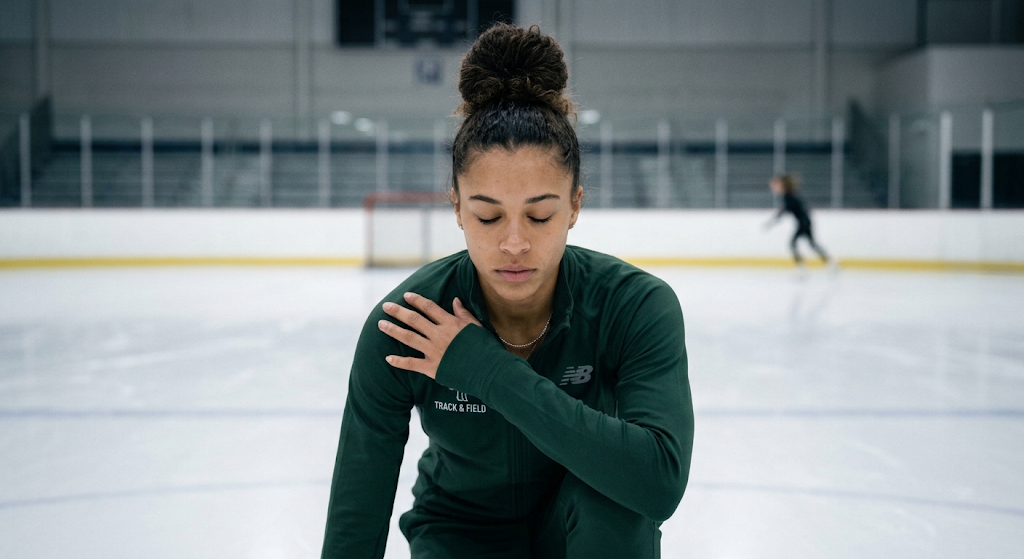
5. Access to a desired feeling or state on demand. Anchoring is a favourite technique of mine. There are a range of methods for applying one, but the result is that the individual ends up with a state or feeling that they can access whenever they need it. For some people, a gesture anchor is very useful allowing a consistent physical gesture or touch to trigger the state they want. For others, an anchor can be created that is activated just by thinking about pressing the button for the desired feeling. Individuals that really engage with the technique and follow the reinforcement protocol for it can give themselves a boost of confidence, focus, calm, energy, or any other positive feeling or state. It’s a brilliant tool for athletes that I regularly use for those seeking a performance edge.
Of course, there are a lot more tools and techniques hypnotherapy offers to help athletes gain and maintain the right mindset for competitions, but all good blogs must come to an end!
If you’re still wondering if you’d benefit from hypnotherapy, consider asking yourself these questions:
- Do you perform better in practice than in actual competitions?
- Do negative thoughts replay in your head after mistakes?
- Are you recovering from an injury but still feel hesitant to push 100%?
- Do you struggle to switch off pre-competition nerves the night before?
If the answer to any of those is yes, then hypnotherapy could be a way forward for you.
In the end, success in sport comes down to the details, the edge, that extra percent that one person has and another person doesn’t. By reprogramming, training and focusing your mind through hypnotherapy, you can get access to that extra competitive edge even if your equally matched in terms of physical ability. For them, the competition is a test or proving ground. For you, it’s business as usual and confirming what you already know; you’re ready, you’re focused, you’re going to crush it.
The next steps…
If you would like to book in, I always find it beneficial to have a chat first. I am aware that booking processes can feel a bit robotic, so I find a chat helps get the ball rolling. After that, we book in an initial consultation appointment to build up a clear picture of what you want to work on and the goals your have. Hypnotherapy is a collaboration, so I like to make sure I have all the information I need to start tailoring the approach to your needs.
To book that first chat, you can email me at mikelloydhypnotherapy@gmail.com or call/WhatsApp me on 07599 986276. I look forward to helping you smash your goals!